Page147
Bollards
A traffic bollard is a strong post designed to stop a car. The term derives from the short/strong posts (called mooring bollards) used to tie ships to piers when docked. Fig. 4.29 shows traffic bollards.
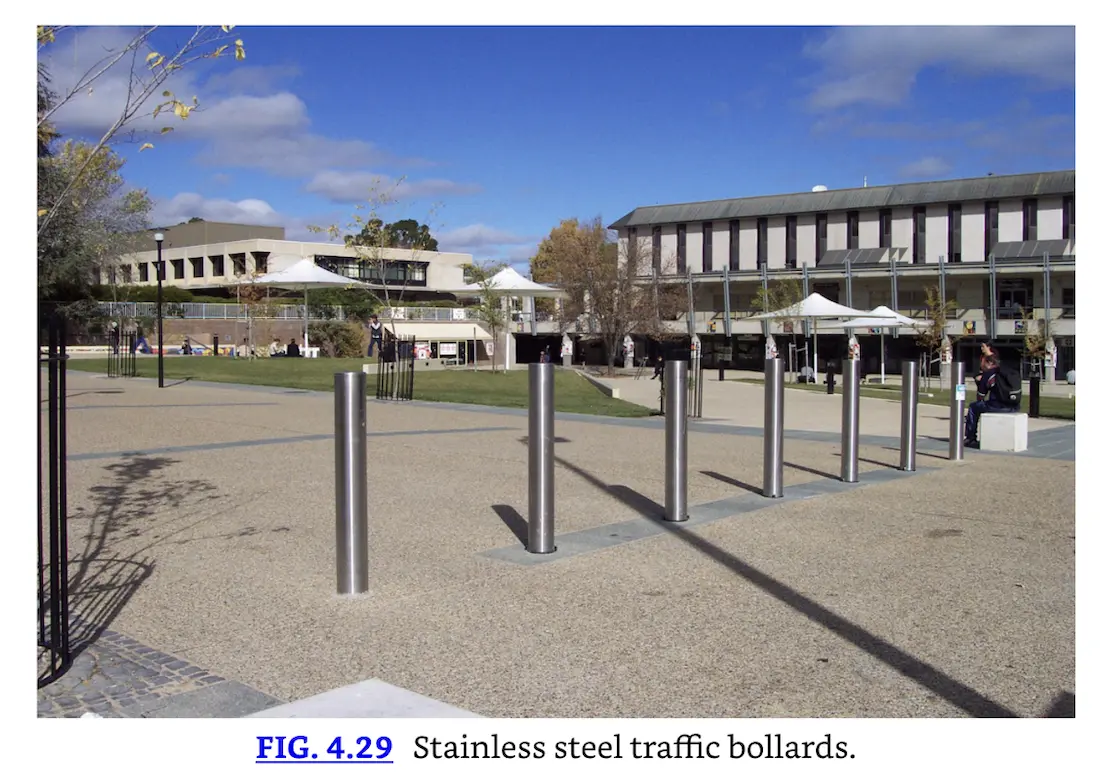 FIG. 4.29 Stainless steel traffic bollards.
Source: https://commons.wikimedia.org/wiki/File:Stainless_steel_bollard_SSP150.JPG; Photograph by Leda Vannaclip. Image under permission of Creative Commons Attribution ShareAlike 3.0.

Bollards are often installed in front of convenience stores, to prevent a confused driver who mixes up the accelerator and brake from driving into the store. They are used in secure facilities to prevent cars from entering (whether intentionally or not). Many secure facilities use large concrete planters for the same effect. These devices are usually placed in front of physically weak areas of a building, such as entryways.
Lights
Lights can act as both a detective and deterrent control. A light that allows a guard to see an intruder is acting as a detective control. Criminals will usually favor a poorly lighted target over a more visible one, so light can also act as a deterrent.
Light should be bright enough to illuminate the desired field of vision (the area being protected). Types of lights include Fresnel (pronounced fray-NELL) lights, named after Augustine-Jean Fresnel. These are the same type of lights originally used in lighthouses, which used Fresnel lenses to aim light in a specific direction.
Light measurement terms include lumen: the amount of light one candle creates. Light was historically measured in foot-candles; one foot-candle is one lumen per square foot. Lux, based on the metric system, is more commonly used now: one lux is one lumen per square meter.