Page152
Smart Cards and Magnetic Stripe Cards
A smart card is a physical access control device that is often used for electronic locks, credit card purchases, or dual-factor authentication systems. “Smart” means the card contains a computer circuit; another term for a smart card is “Integrated Circuit Card” (ICC).
Smart cards may be “contact” or “contactless.” Contact cards must be inserted into a smart card reader, while contactless cards are read wirelessly. One type of contactless card technology is Radio-Frequency Identification (RFID). These cards contain RFID tags (also called transponders) that are read by RFID transceivers.
A magnetic stripe card contains a magnetic stripe that stores information. Unlike smart cards, magnetic stripe cards are passive devices that contain no circuits. These cards are sometimes called swipe cards: they are read when swiped through a card reader.
Many international credit cards are smart cards, while magnetic stripe cards are more commonly used as credit cards in the United States.
Note The “Common Access Card” (CAC), as shown in Fig. 4.37, is an example of a worldwide smart card deployment by the US Department of Defense (DoD). These cards are used for physical access control as well as with smart card readers to provide dual-factor authentication to critical systems. CAC cards store data including cryptographic certificates as part of the DoD’s Public Key Infrastructure (PKI). In addition to providing strong authentication, the cards allow users to digitally sign documents, among other uses.
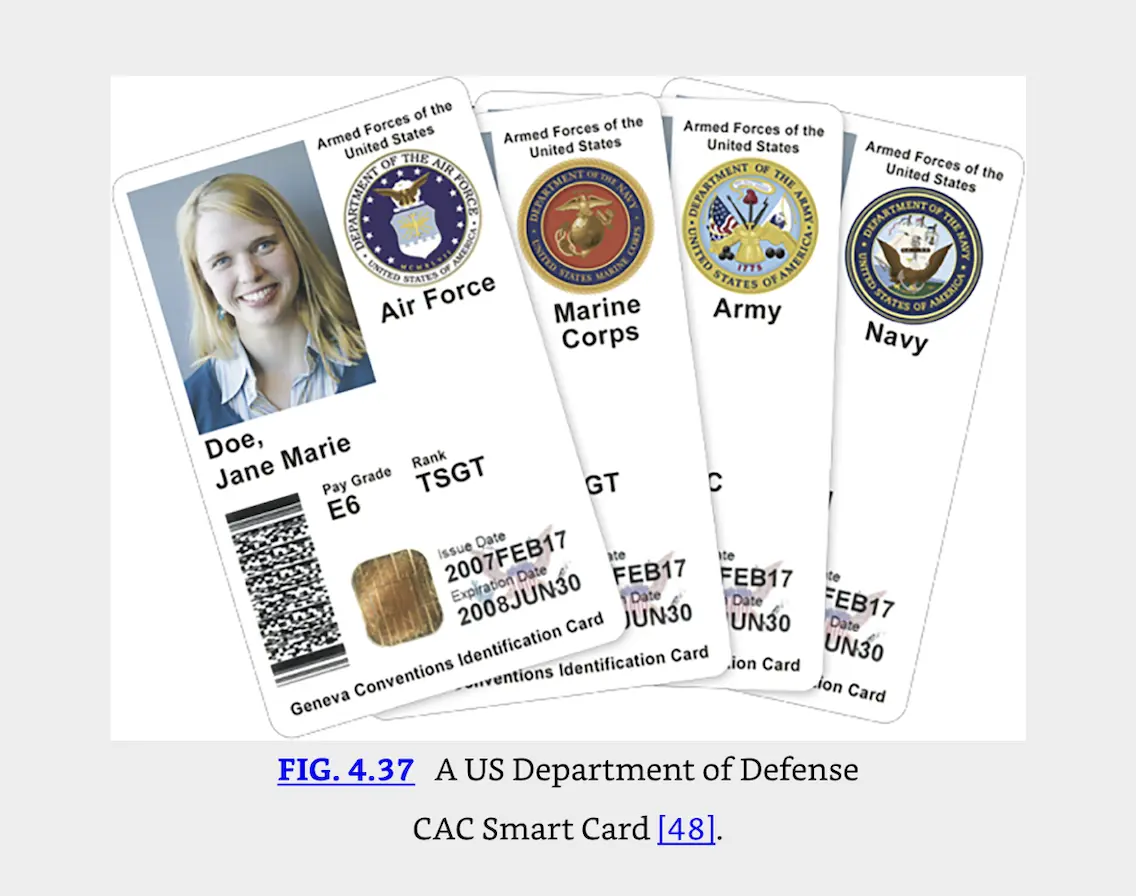
Fig. 4.37 A US Department of Defense CAC Smart Card [48].
Both smart and magnetic stripe may be used in combination with electronic locks to provide physical access control. This approach offers superior accountability when compared with mechanical locks: audit data can be collected electronically, showing a tally of all personnel as they enter and leave a building. This data can also be used for safety purposes, providing the safety warden with an accurate census of personnel who must be accounted for during an evacuation.