Page363
Fourth-Generation Programming Language
Fourth-generation programming languages (4GL) are computer languages that are designed to increase a programmer’s efficiency by automating the creation of computer programming code. They are named “fourth generation” because they can be viewed as the fourth step of evolution of computer languages:
First-generation language: machine code Second-generation language: assembly Third-generation language: COBOL, C, Basic Fourth-generation language: ColdFusion, Progress 4GL, Oracle Reports Fourth-generation languages tend to be Graphical User Interface (GUI)-focused, dragging and dropping elements, and then generating code based on the results. 4GL languages are usually focused on the creation of databases, reports, and websites.
Integrated Development Environment
Integrated Development Environments (IDEs) improve productivity by providing a programmer with a single interface that can perform the following functions:
- Editing
- Debugging
- Syntax checking and highlighting
- Compiling
- Interpreting
- Version control
Microsoft’s Visual Studio Code is one of the most popular IDEs, shown in Fig. 9.1.
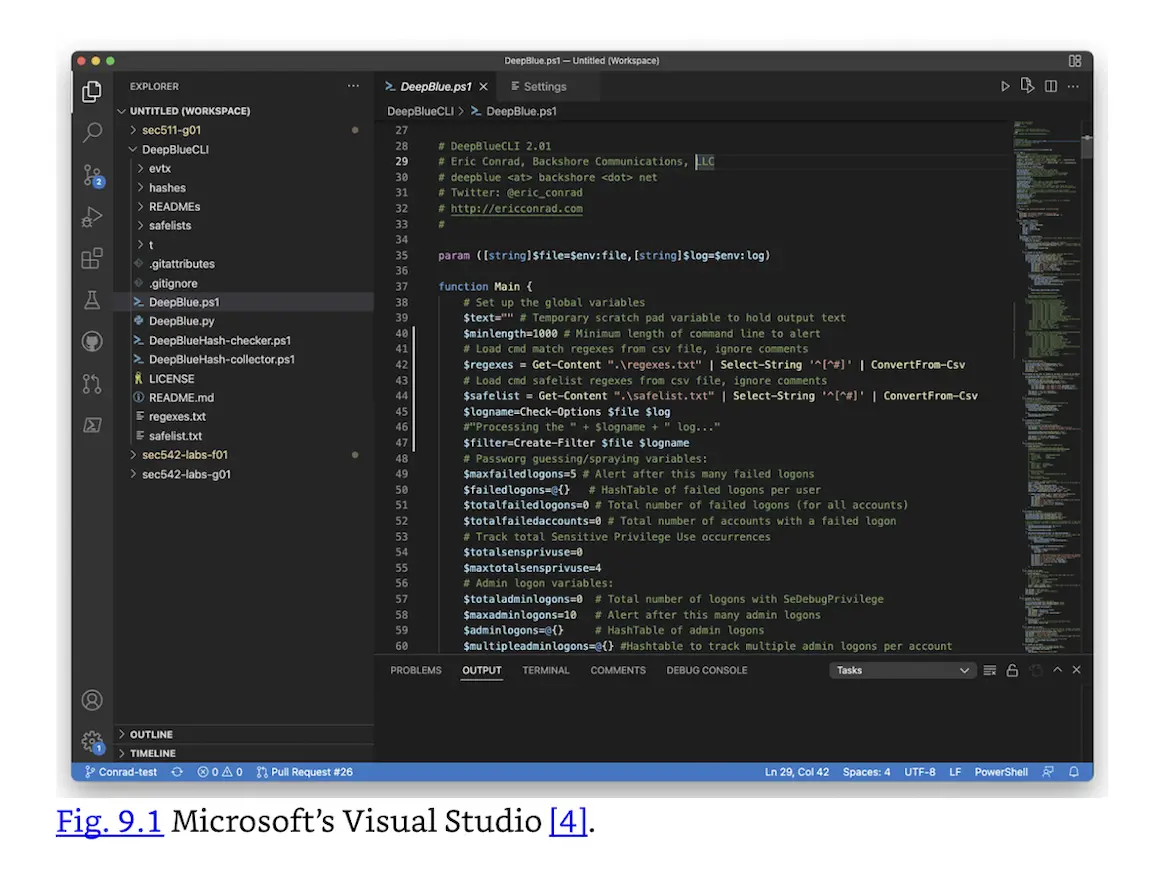 Microsoft's Visual Studio